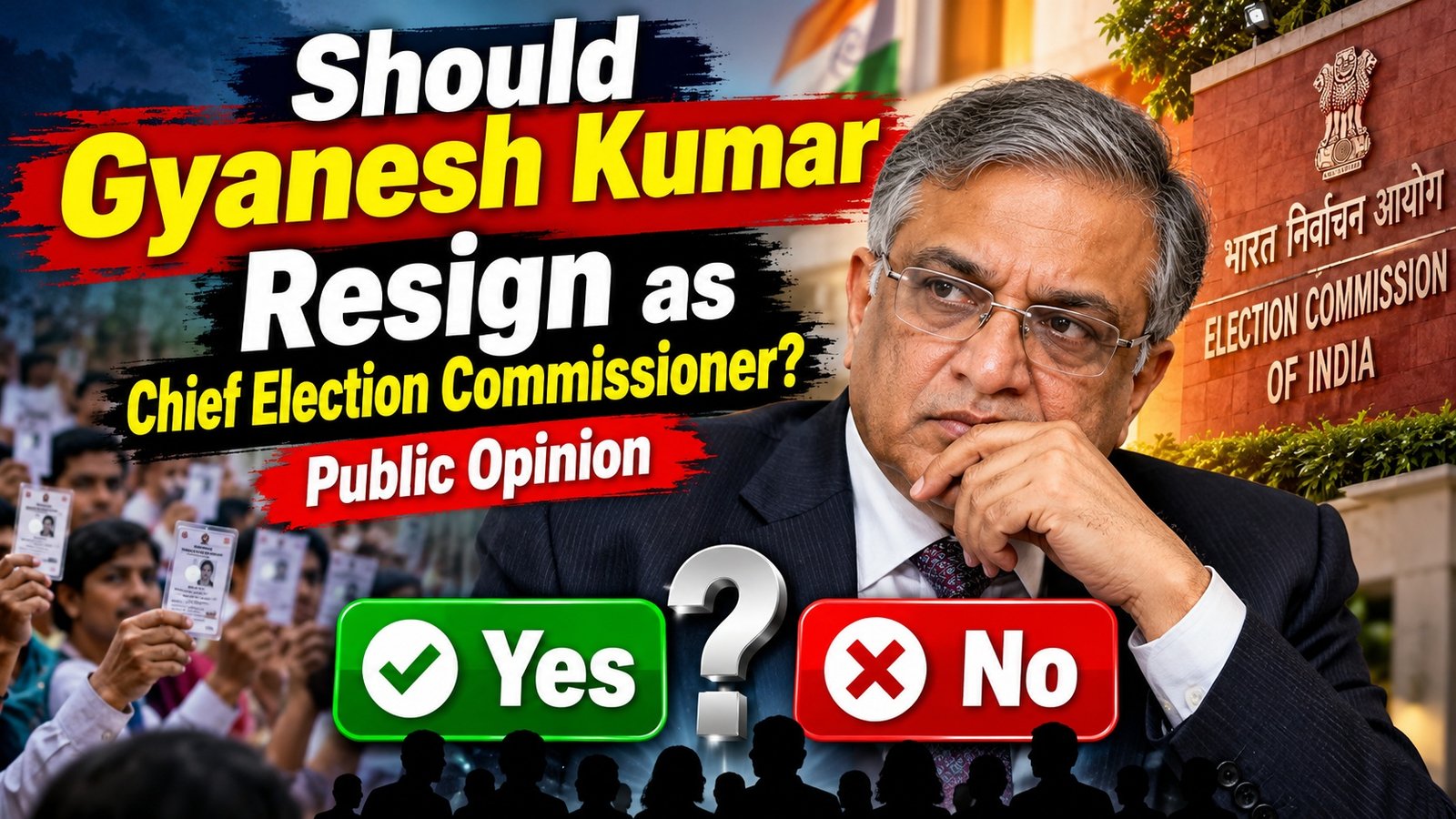
Should Gyanesh Kumar Resign as Chief Election Commissioner? | Public Opinion
Cast your vote and see others' opinions 👇
Results Hidden
Cast your vote first to reveal live results
Matchup Breakdown & Story
In-depth overview & decision guide
The question of whether Gyanesh Kumar should resign as Chief Election Commissioner has become a subject of intense public and political discussion. At the centre of the debate are concerns about the Election Commission's functioning, the revision of electoral rolls, the Special Intensive Revision process, institutional transparency, and the level of public confidence in India's election machinery. The issue has attracted attention because the Chief Election Commissioner holds a highly sensitive constitutional position, and decisions taken by the Election Commission can directly affect how citizens experience the electoral process.
Why Is Gyanesh Kumar Facing a Resignation Debate?
Supporters of the resignation demand argue that the Election Commission must maintain a very high level of public trust. They point to ongoing controversy surrounding electoral-roll revision and questions raised about the way important decisions are discussed and communicated. For these critics, the issue is not simply about an individual office-holder. They believe that when doubts about the election process become widespread, the leadership of the institution should be prepared to answer difficult questions publicly and transparently.
On the other side, people opposing the resignation demand argue that political criticism should not automatically become a reason for a constitutional authority to leave office. They point out that election administration involves complicated legal and procedural decisions, and disagreements over those decisions do not necessarily prove misconduct. According to this view, specific allegations should be examined through evidence and established institutional or legal mechanisms before conclusions are drawn.
The SIR and Electoral Roll Question
A major part of the discussion revolves around the Special Intensive Revision (SIR) of electoral rolls. Electoral rolls are fundamental to elections because they determine who is officially registered as a voter. Any large-scale revision therefore attracts considerable public attention. Supporters of greater scrutiny want clear information about how names are verified, how potentially incorrect entries are handled, and what safeguards exist for eligible voters who may face difficulties during the process.
Critics of the resignation demand take a different approach. They argue that electoral-roll verification is an important administrative responsibility and that changes to voter lists should not automatically be interpreted as evidence of wrongdoing. In their view, the important question is whether the process follows the applicable rules and whether affected citizens have meaningful opportunities to raise objections or seek corrections.
Arguments Supporting Resignation
- Public confidence: Critics argue that the Election Commission needs strong public confidence, particularly during controversial electoral exercises.
- Greater transparency: They want detailed explanations about electoral-roll revision and the decision-making process.
- Institutional accountability: They believe senior officials should accept responsibility when major questions remain unresolved.
- Independent scrutiny: Some argue that an independent examination could help address doubts about the election administration process.
Arguments Against Resignation
- Due process: Opponents argue that allegations should be investigated before resignation is treated as the appropriate response.
- Institutional independence: They believe the Election Commission should be able to make administrative decisions without being driven by political pressure.
- Political disagreement: They point out that opposition from political parties does not automatically establish an institutional failure.
- Evidence over speculation: They prefer documented evidence and formal findings over assumptions based on controversy or public statements.
Public Opinion Comparison
| Issue | Reasons Supporting Resignation | Reasons Opposing Resignation |
|---|---|---|
| Public Trust | Critics believe continuing controversy can affect confidence in election administration. | Supporters believe criticism alone should not determine whether an official resigns. |
| Electoral Roll Revision | Calls for more transparency and safeguards for voters. | Revision is a normal part of maintaining accurate electoral rolls. |
| Accountability | Resignation could be viewed as accepting responsibility for institutional controversy. | Accountability can also come through investigation, explanation, and legal review. |
| Political Pressure | Critics say public pressure reflects serious concerns that deserve attention. | Opponents say constitutional institutions should not operate according to political demands. |
Central question: Should resignation be considered because of the continuing controversy, or should the focus remain on evidence, transparency, investigation, and the established process for reviewing decisions?
What Should Voters Consider?
A simple yes-or-no poll can hide a much more complicated discussion. Someone may believe that the Election Commission should provide more transparency while still believing that resignation is premature. Another person may believe that maintaining public confidence is important enough to justify a leadership change. Both positions can come from different interpretations of the same underlying events.
Voters can consider whether the concerns raised about electoral-roll revision have been adequately answered, whether the available evidence supports allegations of wrongdoing, and whether existing institutional mechanisms are sufficient to resolve the dispute. It is also worth separating political statements from independently established facts. A resignation demand is a political position; it is not, by itself, proof of misconduct.
Why This Debate Matters
The importance of this discussion extends beyond Gyanesh Kumar personally. The Chief Election Commissioner is associated with an institution that plays a central role in India's democratic process. Public confidence in elections depends not only on the technical conduct of polling but also on whether citizens believe that electoral administration is transparent, consistent, and accountable.
At the same time, institutional independence is also important. Election authorities need sufficient independence to apply electoral rules without changing decisions simply because one political group or another is unhappy. The challenge is finding the appropriate balance between independence and accountability. That balance is at the heart of the current public debate.
Final Outlook & Community Poll
The debate over Gyanesh Kumar's resignation is likely to remain closely connected with wider questions about electoral transparency, voter-list revision, institutional independence, and public trust. There are legitimate questions for citizens to ask, but there is also a need to distinguish between allegations, political demands, administrative disagreements, and findings supported by evidence.
This poll gives the public a straightforward choice: Should Gyanesh Kumar resign as Chief Election Commissioner? A “Yes” vote can represent the view that the continuing controversy requires leadership accountability. A “No” vote can represent the view that controversy and political criticism alone are not sufficient grounds for resignation. Readers can make their own choice and explain their reasoning in the comments, keeping the discussion focused on facts, electoral procedures, transparency, and accountability.
Discussions & Reviews
15
I think the biggest issue is public confidence. Election Commission ko clear answers dene chahiye, especially on the voter list process.
Resignation should come after proper evidence, not simply because political parties are demanding it. Accountability and political pressure are different things.
@Guest_54078 agree, but transparency bhi equally important hai. Agar process clean hai to detailed explanation dene me problem nahi honi chahiye.
For me, the SIR issue matters more than the resignation itself. I want to know how genuine voters are being protected during the revision.
Political controversy alone should not decide the future of a constitutional office. Show the evidence first and then discuss accountability.
Mujhe lagta hai public trust ko ignore nahi kar sakte. Election Commission ko har major doubt ka straightforward answer dena chahiye.
@Rahul_Sharm public trust important hai, but resignation is a serious step. Investigation aur explanation pehle hona better hai.
Honestly I am still undecided. There are valid questions on both sides, and I would like to see more documented information.
Frequently Asked Questions
Q: Who is currently winning this poll?
A: Currently, Yes is leading with the most votes.
Q: Is live voting currently active for this topic?
A: Yes, live voting is currently active for this topic. Cast your vote to see real-time changes.
Related Topics

Physics Wallah Vidyapeeth vs Allen Kota for NEET: Which is Better | Public Vote
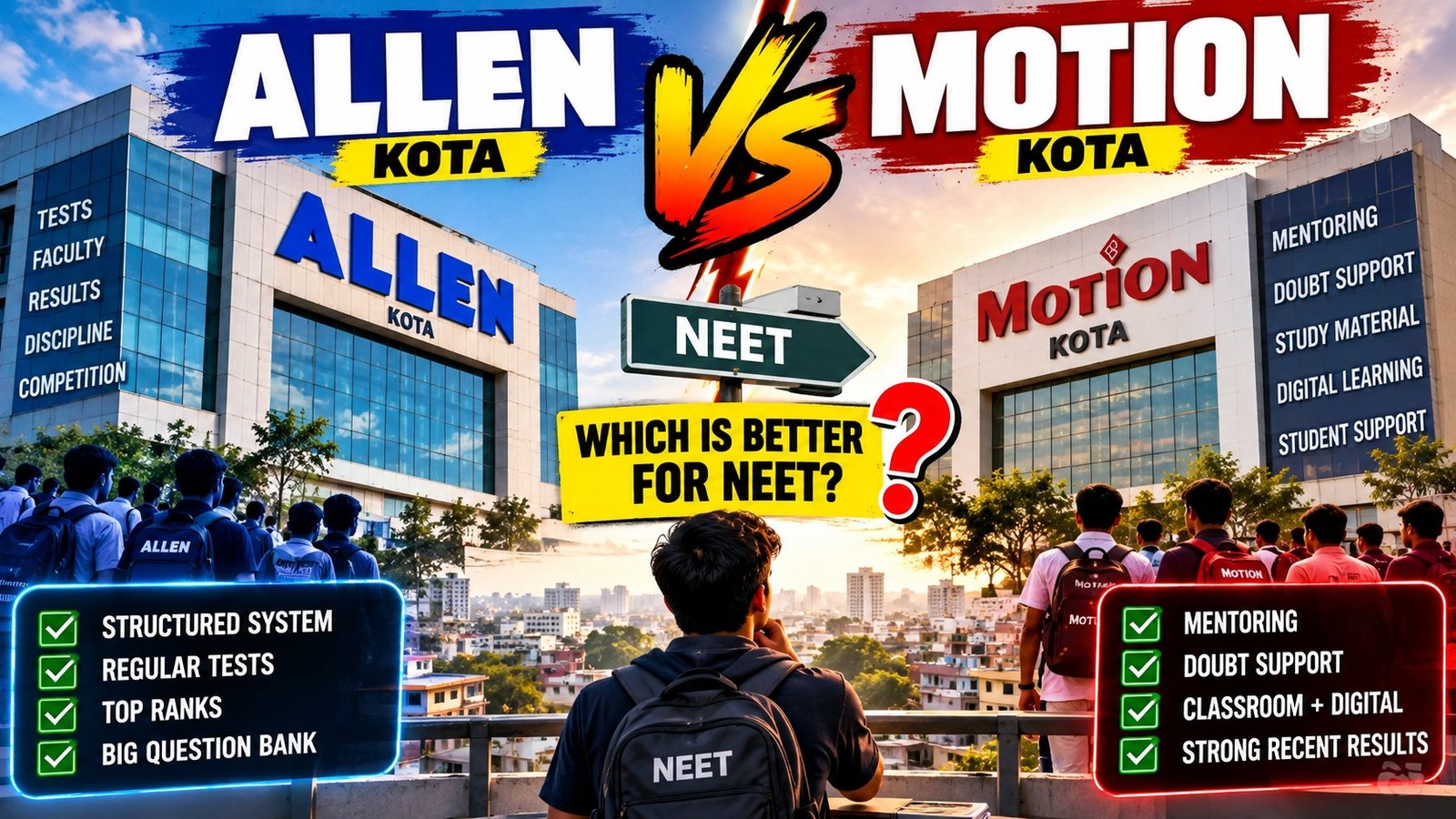
Allen vs Motion Kota for NEET — Student Opinion & Vote
Should Gyanesh Kumar Resign as Chief Election Commissioner | Public Opinion