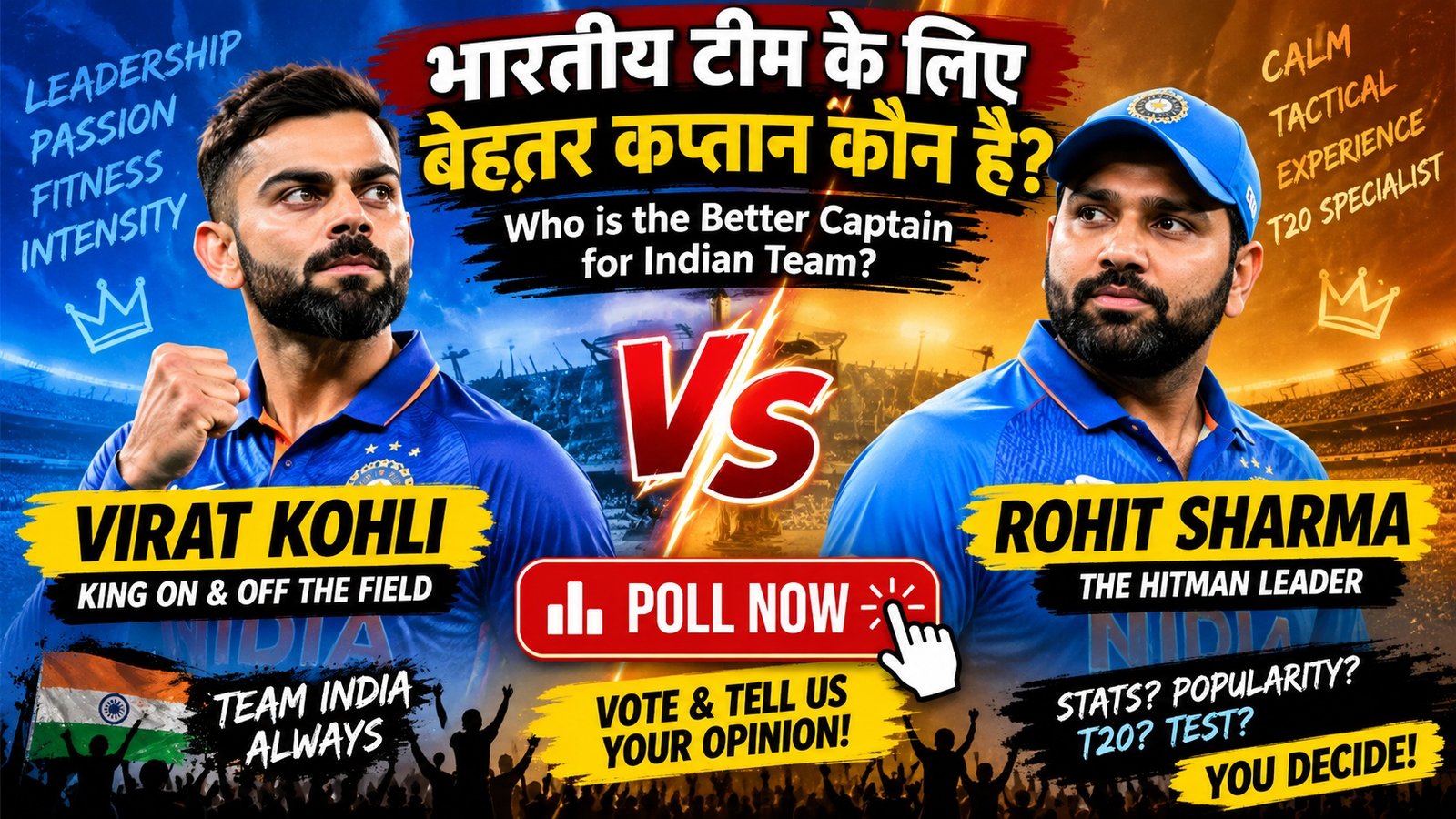
Virat Kohli vs Rohit Sharma, who is the better captain for Indian team
Cast your vote and see others' opinions 👇
Results Hidden
Cast your vote first to reveal live results
Matchup Breakdown & Story
In-depth overview & decision guide
The debate around Virat Kohli vs Rohit Sharma is one of the most compelling discussions in modern Indian cricket. Both players have led India at the highest level, but their leadership styles, tactical instincts, personalities and records are noticeably different. Kohli is associated with intensity, fitness, aggressive intent and a demanding approach, while Rohit is widely recognised for his calm temperament, tactical flexibility and ability to manage different personalities in a dressing room. The question is not simply who won more matches; it is about which captain better suited Indian cricket and which leadership model produced the stronger overall team.
Background & Critical Context
Virat Kohli became India's Test captain in 2014 and later took charge across formats. His captaincy coincided with a major emphasis on fast bowling, fitness standards and competitive intensity. Under Kohli, India developed a stronger pace attack and became a formidable Test side, particularly overseas. His leadership was often emotionally charged, but that intensity helped establish a clear winning mentality.
Rohit Sharma subsequently brought a different approach. He is generally more relaxed on the field and is known for reading match situations carefully. His captaincy has often involved trusting experienced players while giving younger cricketers defined roles. Rohit's leadership also benefited from his extensive experience as a successful franchise captain and from his understanding of T20 tactics.
Deep-Dive Analytical Breakdown
If the debate is specifically about Test captaincy, Kohli has an extremely strong case. India's transformation into a consistent overseas competitor was one of the defining features of his tenure. He demanded high fitness levels, backed aggressive bowling plans and encouraged players to compete rather than merely survive.
Rohit's strongest argument comes from limited-overs leadership. He has traditionally appeared more comfortable making tactical adjustments during short matches, where bowling changes, match-ups and batting combinations can alter a game within a few overs. His ability to stay composed when the pressure rises is another major advantage.
The popularity question is slightly different. Virat Kohli has an enormous global following and is arguably one of India's most recognisable sporting personalities. His aggressive public persona, extraordinary batting career and long-standing international presence have created a massive fan base. Rohit also enjoys immense popularity, particularly among Indian cricket supporters who appreciate his leadership and relaxed personality. Popularity, however, should not automatically be treated as evidence of superior captaincy.
Statistical & Performance Comparison
| Evaluation Metric | Virat Kohli | Rohit Sharma |
|---|---|---|
| Leadership Style | Aggressive, intense, fitness-driven | Calm, tactical, flexible |
| Test Captaincy | Exceptional impact and overseas growth | More limited tenure and experience |
| ODI Captaincy | Strong win record and competitive approach | Strong results with major tournament success |
| T20 Leadership | Structured, high-intensity approach | Highly tactical and experienced in T20 cricket |
| Public Popularity | Massive global following | Massive Indian and international following |
Analyst Verdict: There is no universal winner. Kohli has the stronger argument as a transformative Test leader and culture-builder, while Rohit has a particularly persuasive case as a limited-overs and T20 captain because of his tactical calm, match awareness and tournament experience.
Key Factors & Points of Debate
- Tactical Advantage: Rohit's calm decision-making can be especially valuable in T20 cricket, where a single over or match-up can change the result.
- Competitive Culture: Kohli's biggest contribution as captain was arguably the intensity and fitness culture he demanded from the Indian team.
- Popularity: Kohli has exceptional worldwide popularity, while Rohit's approachable personality and leadership success have made him equally influential with Indian fans.
- Pressure Handling: Both captains have faced enormous expectations. Rohit's composed style and Kohli's aggressive mindset represent two very different methods of handling pressure.
- Team Building: Kohli pushed players toward physical standards and fast-bowling depth, while Rohit has often emphasised role clarity and tactical match-ups.
Final Outlook & Community Poll
So, who is better: Rohit or Virat? The answer depends heavily on the format and the criteria being used. If the priority is building a relentless Test team and changing India's competitive culture, Kohli has a compelling claim. If the focus is T20 cricket, tactical flexibility and managing a modern limited-overs squad, Rohit's case becomes much stronger. The popularity battle may lean toward Kohli because of his extraordinary global reach, but Rohit's fan following and influence are substantial in their own right.
For Indian cricket fans, this is ultimately a comparison between two different leadership philosophies rather than a simple winner-versus-loser argument. Kohli represented intensity, aggression and relentless standards. Rohit represented composure, instinctive tactics and trust in players. Both left a significant mark on Indian cricket, and both deserve credit for different parts of India's modern success. Vote for the captain you believe was better for the Indian team, and explain whether your choice changes when the question is specifically about T20 cricket.
Discussions & Reviews
14
For Test captaincy, I will pick Virat without much hesitation. The fitness culture and overseas mindset changed under him.
T20 ke liye Rohit bhai. His calmness during pressure situations is a huge advantage.
@Guest_43718 agree on T20, but overall captaincy compare karoge to Virat ka Test legacy ignore nahi kar sakte.
Popularity me Virat clearly ahead hai. Rohit is hugely popular too, but Kohli has a different global fan following.

I think people confuse batting greatness with captaincy. Dono ko leadership decisions ke basis par compare karo.
Rohit ka biggest strength is reading the game. T20 me captain ko instantly match-ups samajhne padte hain, and he does that really well.
Virat brought a completely different intensity to Indian cricket. Even when results didn't go his way, the competitive mindset was obvious.

Honestly, format matters too much here. Test = Virat, T20 = Rohit for me.
Frequently Asked Questions
Q: Who is currently winning this poll?
A: Currently, Virat Kohli is leading with the most votes.
Q: Is live voting currently active for this topic?
A: Yes, live voting is currently active for this topic. Cast your vote to see real-time changes.
Related Topics

Physics Wallah Vidyapeeth vs Allen Kota for NEET: Which is Better | Public Vote
Allen vs Motion Kota for NEET — Student Opinion & Vote
Should Gyanesh Kumar Resign as Chief Election Commissioner | Public Opinion